
Search Is Changing, and Your Business Needs to Change with It
For years, traditional SEO has helped businesses get found online. Ranking well on Google meant more visibility, more clicks, and more potential customers.
But the way people find answers is shifting. Tools like ChatGPT, Google’s AI Overviews, Perplexity and Claude don’t just list websites, they explain information directly. They act as answer engines, not search engines.

This creates a new challenge and a new opportunity:
Your business doesn’t just need to appear in search results, it needs to be cited inside AI-generated answers.
This guide breaks down what that means in simple terms and shows you how to prepare. Our goal is to provide clarity, not complexity, so you can make confident decisions about your digital marketing.
What’s the Difference Between SEO and AI SEO?
Traditional SEO isn’t going anywhere. Google still processes trillions of searches each year. But AI platforms have introduced an additional layer of visibility that businesses can benefit from.
Here’s a clear breakdown:
Traditional SEO:

Goal: Appear in Google’s list of blue links
Focus: Keywords, backlinks, page optimisation
User queries: Short phrases (“boiler servicing near me”)
Interaction: User clicks your website to learn more
AI SEO (also known as Generative Engine Optimisation or GEO for short):
Goal: Be cited or recommended in AI-generated answers
Focus: Clear, structured, helpful content that AI can easily understand
User queries: Longer, conversational questions (“What should I expect during a standard boiler service, and how long does it take?”)
Interaction: The AI summarises your expertise directly in its answer
Both matter. But together, they create the strongest visibility strategy.
Why AI SEO Matters for Service-Based Businesses
People increasingly ask AI tools for advice, whether that’s:
“Who is the best local electrician near me?”
“How do I compare plumbing companies?”
“What should I check before hiring a roofer?”
AI platforms respond by pulling insights from trusted sources.
If your business is one of those sources, you win visibility before someone even reaches Google.
As a service-based business, this can mean:
More brand awareness
More authority
More trust
More enquiries
This isn’t about chasing trends. It’s about showing up wherever your customers ask questions.
Key Differences: Traditional SEO vs AI SEO
The main shift is that AI tools don’t just look for keywords. They look for clear answers, structured content, and trustworthy signals from across the web.
keyword-focused to a context-focused strategy.
Here’s how expectations have changed:
Traditional SEO | AI SEO / Generative Engine Optimisation (GEO) | |
|---|---|---|
Primary goal: | Rank high in search results. | Be cited and directly in AI answers. |
User queries: | Focus on short-tail keywords 'electrician near me'. | Focus on long-tail, conversational, and natural language questions. |
Content style: | Keyword-optimised in titles, headers and body text. | Clear, direct, easy to extract. Structured so an AI can easily read, interpret, understand and quote. |
Authority signals: | Heavily reliant on high-authority backlinks to build page and domain authority. | Relies on a broader range - mentions, reviews, citations, brand recognition across diverse platforms (e.g. forums). |
Technical focus: | Mobile, crawlability, speed, indexability by traditional search crawlers. | All traditional plus AI crawler accessibility. |
Success metrics: | Rankings, Click-Through Rate, organic traffic, conversions. | AI mentions, brand visibility, sentiment. |
For business owners, this shift from a keyword-focused to a context-focused strategy is good news:
Creating clear, helpful content puts you in a strong position for both SEO and AI visibility.
How to Rank on Specific AI
Platforms
You will be right to assume that each major platform will prioritise different signals and work to its own bespoke algorithm. Which simply means you’ll have to tailor your approach for each.
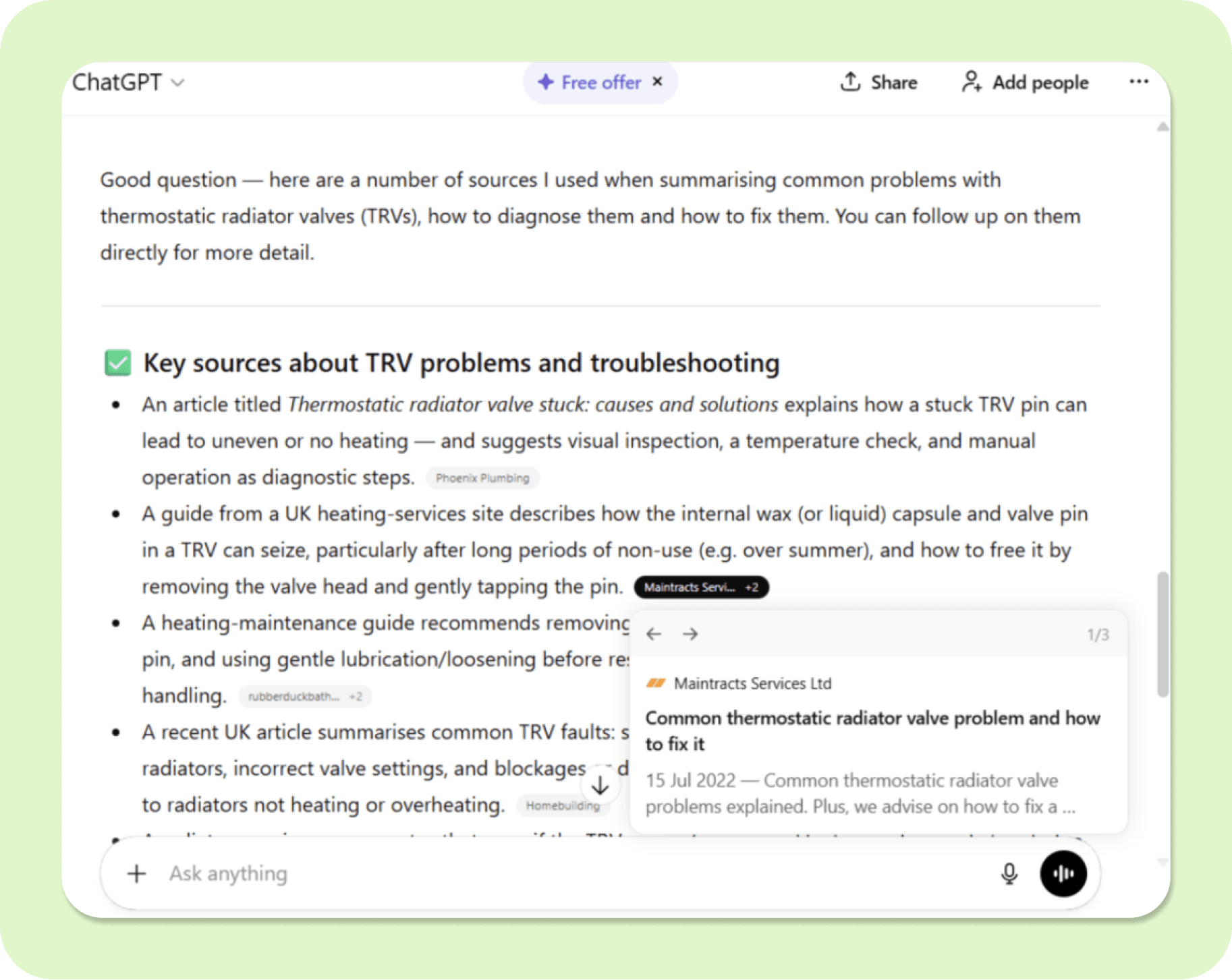
How to Optimise for ChatGPT
ChatGPT is now one of the most popular and influential AI platforms for brand recommendations.
Research shows it favours businesses with:
- 1
Strong brand mentions across the web
- 2
Consistent, high-quality reviews
- 3
Relevant content that matches user intent
- 4
A long-standing, trustworthy online footprint
- 5
Inclusion in “best of” lists and comparison articles
- 6
Authority signals like social proof and domain trust
Practical steps for service-based businesses
Increase online discussions about your business (digital PR, community engagement).
Make review generation part of your process, not a one-off request.
Get included in comparison articles where customers look for advice.
Build trust signals: awards, accreditations, strong website content.
You don’t need to “game” ChatGPT, you just need to build credibility in the places it looks.
How to Optimise for Google AI Overviews
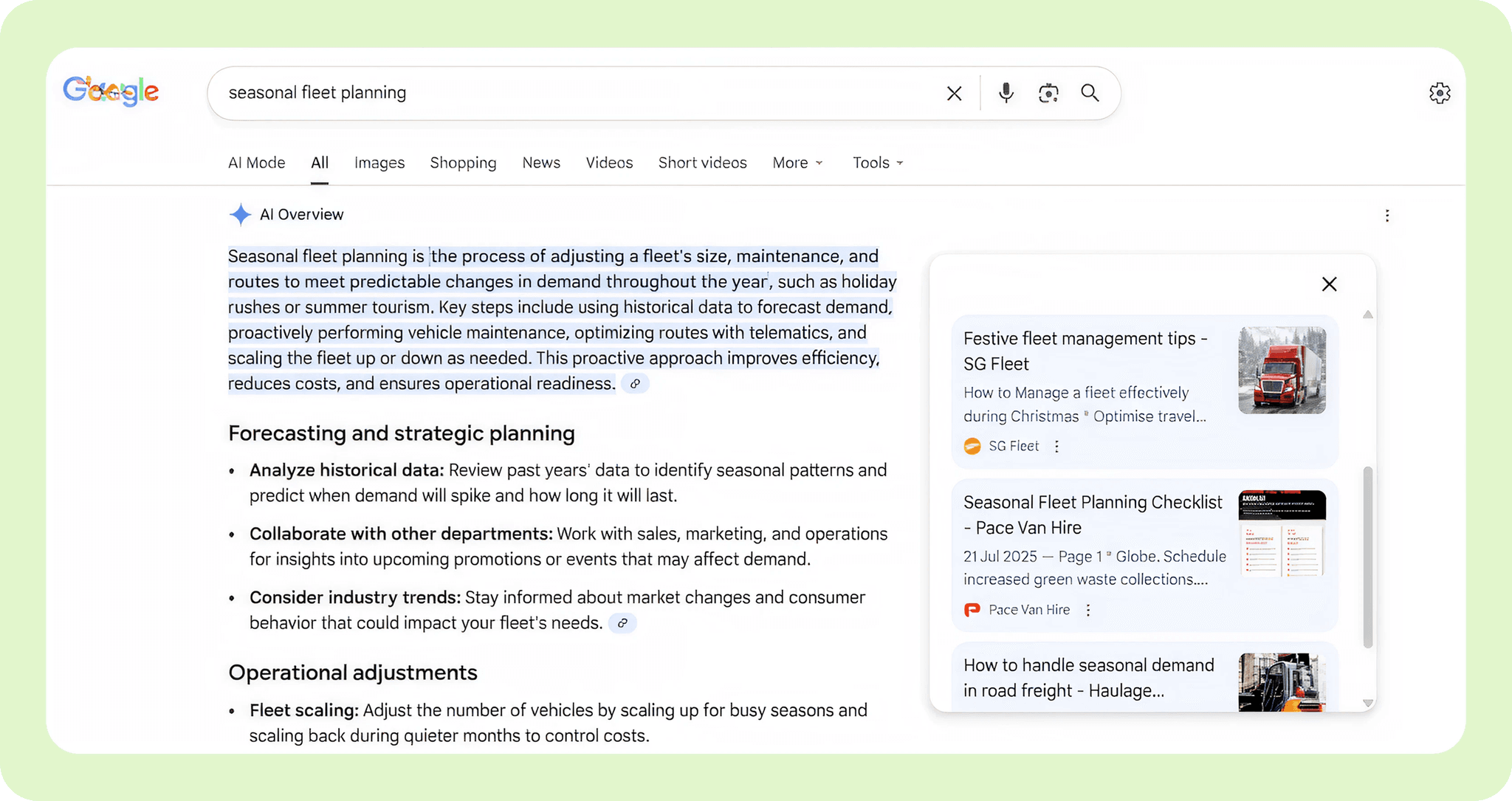
Google AI Overviews now appear above traditional search results for many queries. Being featured here is a major advantage.
What Google looks for:
Clear answers to common questions
Structured content with headings, lists, and definitions
Original data or insights
User-generated content (reviews, FAQs, discussions)
Accurate structured data (schema)
Best practices:
Write pages that answer questions directly (“How much does boiler servicing cost?”).
Share pricing approaches, processes, and expertise openly.
Encourage customers to leave detailed reviews.
Create helpful content in multiple formats - blogs, videos, guides.
Transparency pays off: Google rewards useful businesses, not vague ones.
How to Optimise for Perplexity AI
Perplexity is growing fast. It’s known for accuracy and detailed citations.
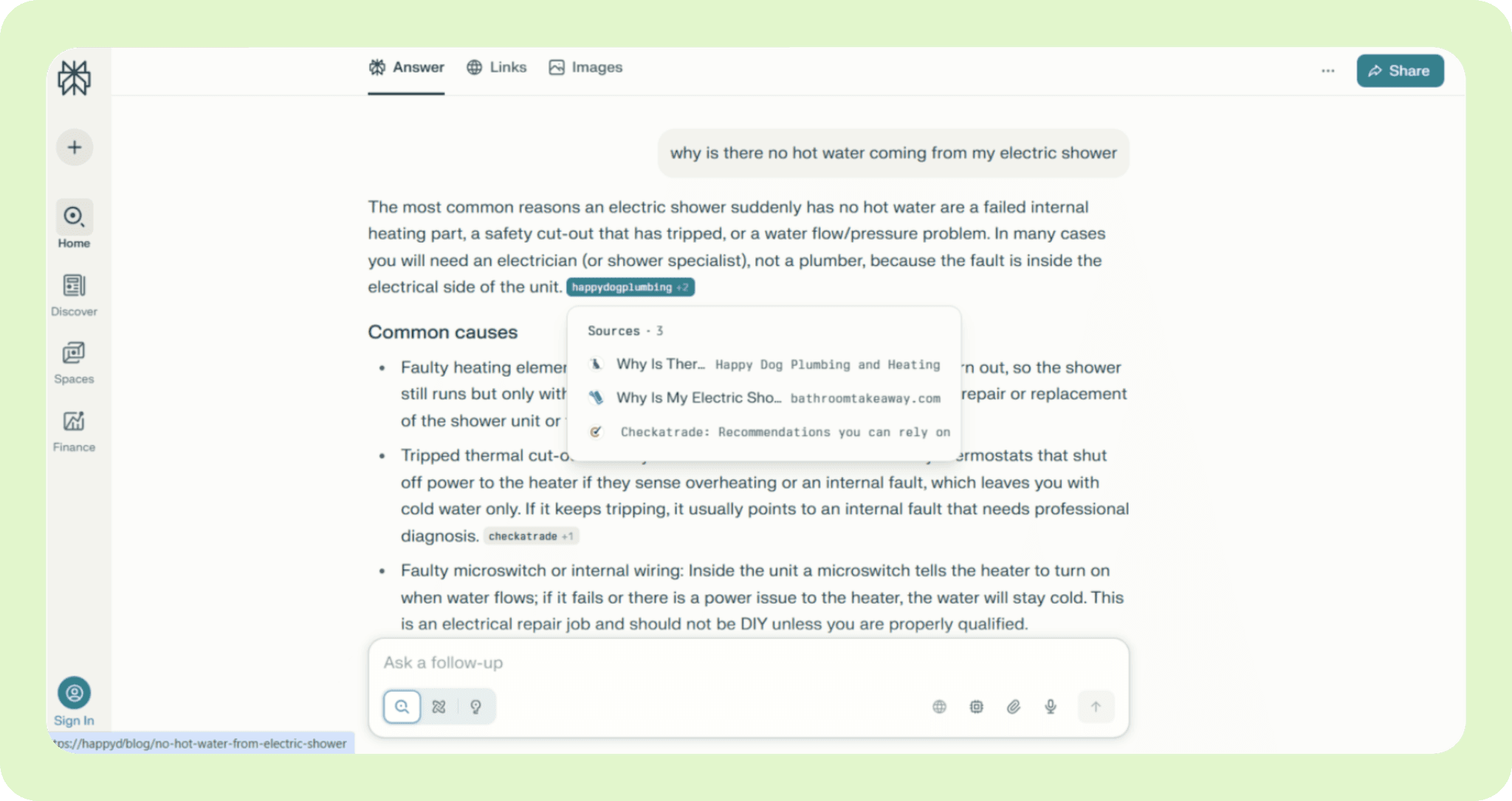
Firstpagesage.com reported the following on Perplexity's ranking factors:
Ranking factors
Factor | Strength (General Queries) |
|---|---|
Mentions in authoritative lists | 64% |
Reviews | 31% |
Awards and accreditations | 05% |
For local queries:
Local reviews matter even more. Perplexity prioritises:
Google Business Profile (GBP) reviews
Yelp, TripAdvisor, TrustPilot
Directory listings and databases
Your action plan:
ctively secure placements in high-quality “best of” lists.
Strengthen your presence on key review platforms.
Keep business data consistent across the web.
Highlight awards, training, accreditations and certifications.
The more signals Perplexity can cross-check, the more it trusts you.
Technical SEO for the AI Era
Good technical SEO helps both search engines and AI models understand your content.
"A key focus area in 2026 is AI crawler access."
Why this matters:
Some bots fetch content for citations.
Others scrape data to train AI models.
Your business can decide whether to:
Allow citation bots (recommended)
Block training bots (optional)
Important AI crawlers:
OAI-SearchBot - ChatGPT search (allow)
ClaudeBot-Claude real-time citations (allow)
PerplexityBot - Perplexity indexing (allow)
GPTBot - model training (optional block)
anthropic-ai - model training (optional block)
Google-Extended - Gemini training (optional block)
Best practices:
Keep your robots.txt clear and up to date
Allow crawlers that help customers find you
Review server logs to check who is accessing your site
This gives you control, transparency, and peace of mind.
The Hybrid Future: SEO & AI SEO Working Together
SEO is not being replaced - it's simply evolving.
Your business still needs:
Strong rankings
Good local visibility
Helpful content
Trust signals
A reliable, professional website
But to win in 2026 and beyond, you also need content that:
Answers questions clearly
Is structured in logical, easy-to-read, understand and quote blocks
Is supported by reviews, mentions, and authority
Is accessible to both search engines and AI crawlers
The simple truth is this: Businesses that communicate clearly and build trust will win across every platform.

You don’t need to be everywhere - you just need to be clear and consistent.
The rise of AI isn’t something to fear. It’s an opportunity to present your business more clearly and confidently than ever before.
If you:
Share your expertise openly
Build trust through reviews and reputation
Keep your website clear and structured
Invest in both SEO and AI visibility
...you’ll be well-positioned for long-term growth.
At Make Me Local, we help businesses
do exactly that.
As a partner, not just a vendor, we work closely with owners to build sustainable, measurable growth with full transparency and a human-first approach.
Want your business to show up where customers are actually looking? We can help.